Coffee knowledge
How to use the coffee flavour wheel
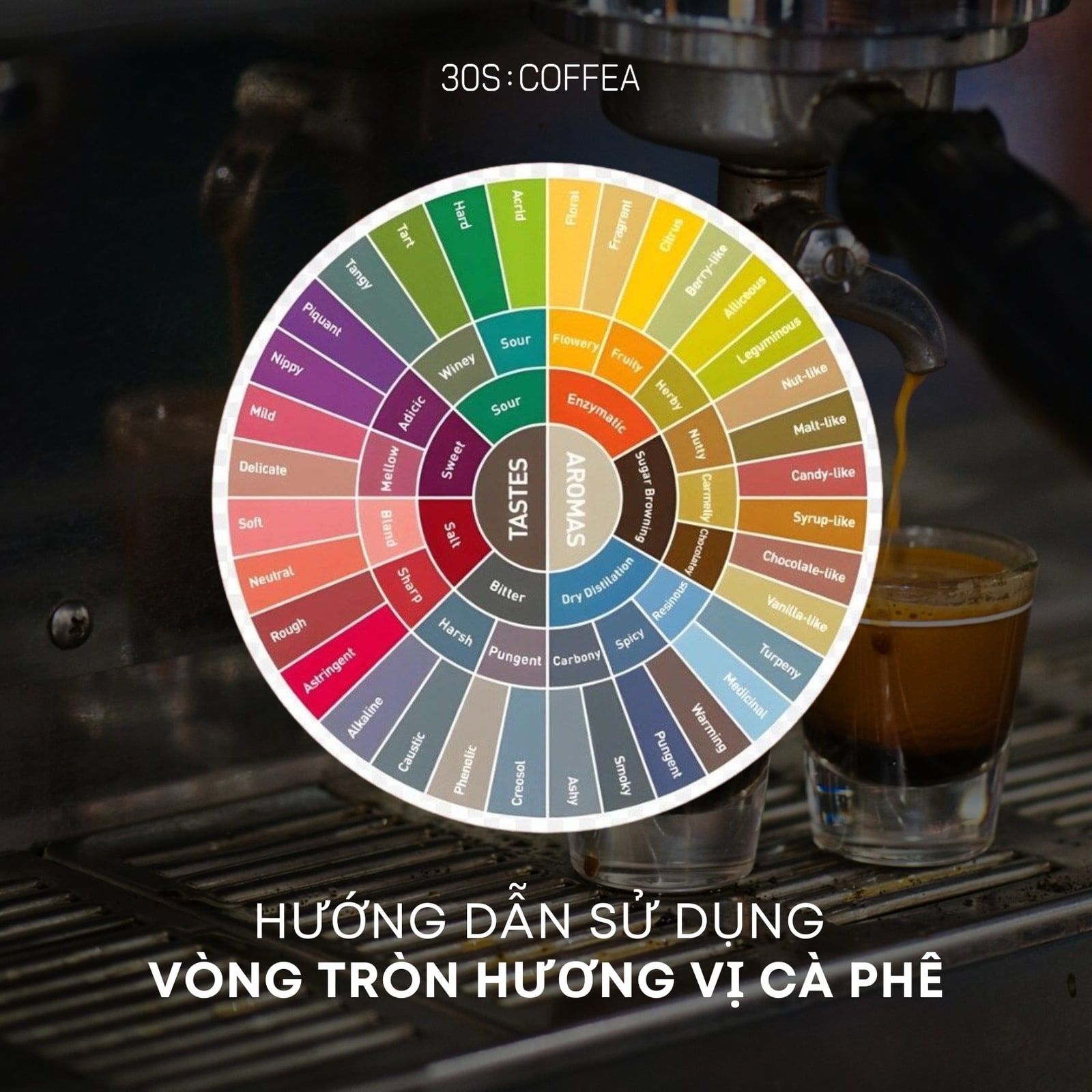
Coffee Taster's Flavour Wheel
If you are beginning your journey into coffee you have certainly seen a colourful wheel, the Coffee Taster's Flavor Wheel. It was developed by the SCA together with World Coffee Research, and it is now the reference point for sensory evaluation in specialty coffee.
Here is a short guide from 30S to help you read that wheel.
1. Get to know the structure of the wheel
The coffee flavour wheel is divided into three main rings:
- The centre ring: the basic descriptors such as fruity, nutty, sweet and floral.
- The middle ring: the branches that develop each central group in more detail.
- The outer ring: the most specific descriptors, such as lemon, lime, grapefruit, strawberry, raisin and peach.
The aim is not to memorise all of this vocabulary. It is to learn how to move from a general impression to a specific one.
2. Coffee is not only taste
In coffee sensory work, flavour is the sum of:
- Taste: sour, sweet, bitter and so on.
- Aroma: dry aroma, wet aroma.
- Mouthfeel: light, round, syrupy.
Practise tasting coffee at different stages and write down what you notice.
3. Practise with a proper cupping
Cupping helps you concentrate on what you perceive. The sequence is:
- Smell the dry grounds.
- Smell the coffee once it is steeped hot.
- Slurp sharply from the spoon so it spreads across the mouth.
Then compare against the wheel: start from fruity, then try to name it specifically, as peach or as raisin.
4. Use the Sensory Lexicon
The flavour wheel is built on the World Coffee Research Sensory Lexicon, the formal vocabulary of coffee flavour. Every term on the wheel has a clear definition and a reference example:
"Brown spice" is like cinnamon or clove.
"Almond" is like roasted almonds.
5. A few small notes
- You do not need to name it exactly right from the start. The first step is simply feeling that something is familiar. "Something like apricot" is already better than "I don't know what this is".
- Do not compare your perception directly with someone else's, because everyone carries a different sensory vocabulary.
- Be patient. The more you practise, the more confident you become at putting coffee flavour into words.
The coffee flavour wheel is a map that guides you through a world of nuance and depth. It is not only for professionals. It is a useful learning tool for anyone who loves coffee.